Jump to:
> The Sangha's Heritage
> Our Teachers
> Steering Committee |
|
Joan
Sutherland Roshi, senior teacher
of Zen Buddhism was the founding teacher for the
Wet Mountain Sangha in Pueblo.
|
Sarah Bender
Sensei is resident teacher for Springs
Mountain Sangha and a holding teacher for the
Wet Mountain Sangha.
Andrew
Palmer, Sensei
is a holding teacher for WMS and is Buddhist
Program leader for the U.S. Air Force Academy.
|
|
|
|
The
Wet Mountain Sangha is affiliated with Joan Sutherland's
Open Source network.
The
trademarks of this koan school include an emphasis
on lay practice, and an openness to ideas from
surrounding cultural contexts.
Zen
practice doesn't require abandoning other religious
traditions but rather tends to deepen spriritual
insights.
|
|



|
| The
Sangha's Lineage and Heritage |
|
The
Open Source: A Little History
The
Open Source is a network of individuals and communities
in the western United States engaged in Zen practice
together. We emphasize collaboration, the development
of authentic American expressions of Zen, and
the confluence of koans and creativity. Open Source
communities include Awakened
Life,
the home of the Open Source in Santa Fe, New Mexico,
The Open Source Project in Northern California,
Springs Mountain Sangha in Colorado Springs, CO,
Wet Mountain Sangha in Pueblo, CO, the Desert
Rain Sangha in Tucson, AZ, and The Crimson Gate
Meditation Community in Oakland, CA. Open Source
teachers include founder Joan Sutherland, Roshi
in Santa Fe, Sarah Bender, Sensei, and Andrew
Palmer, Sensei in Colorado Springs, Tenney Nathanson,
Sensei in Tucson, and Megan Rundel, Sensei in
Oakland. David Cockrell is the Wet Mountain Sangha's
meditation instructor.
Though
Open Source forms and practices are grounded in
the traditions we inherited from East Asia, over
the years we’ve evolved ways of practice that
are more natural for many Americans. Our intention
is to provide an atmosphere that is welcoming,
respectful, and deep. Our liturgy was created
by Joan Sutherland, John Tarrant, and the late
Rich Domingue, and it combines original material
with traditional chants set to western rhythms
and melodies.
The
Open Source is part of the Pacific Zen School,
an innovative Western koan school with roots in
East Asian traditions. Koan meditation developed
in China over 1000 years ago, and the first koans
were the records of encounters between early Chan
teachers and their students. They discovered that
when someone brought one of these stories into
her meditation, she could have the same transforming
experience that the koan described. The koans
were collected into books that are still used
today, and they are still stimulating these profound
experiences in koan meditators.
In
Japan, Zen divided into koan and non-koan schools.
The non-koan school taught silent, formless meditation
and emphasized a unified life of mindfulness;
the koan school emphasized the transformation
of consciousness and the relationship between
meditation and creativity. The koan tradition
would periodically go dormant and then experience
a revival. One great reviver was Hakuin Ekaku
(1686-1769), and most of the koan lines in Japan
and the West today descend from him. Living in
the country, he taught Zen to monastics and laypeople
from all walks of life, and he and his circle
organized the koans into a curriculum with accepted
answers.
In
mid-19th century Japan, an attempt was made to
revive the tradition of awakening in non-koan
Zen by merging it with the koan school. This led
to the establishment of Sanbo Kyodan, a hybrid
Soto-Rinzai school that became particularly influential
in transmitting koan Zen to the West. In the pioneering
generation, Philip Kapleau, Robert Aitken and
the Diamond Sangha, Taizan Maezumi, Maurine Stuart,
and Eido Shimano all had some connection with
Sanbo Kyodan.
The
Pacific Zen School is a second generation evolution
of this line. It began with the founding of Pacific
Zen Institute by John Tarrant and Joan Sutherland
in Northern California in the late 1990’s. The
Pacific Zen School now includes both PZI and the
Open Source. The house style honors the original
Chinese koan way while emphasizing the integration
of koan inquiry with contemporary lives, explores
communal as well as individual koan practice and
its relationship to creativity, highlights the
contributions of women to the koan tradition,
seeks to develop a body of Western koans, and
in general is interested in what happens when
you trust the koans themselves and the experiences
of the people working with them
to reveal the way the tradition should evolve.
> Back to Top |
| Our Teachers |
 |
Joan Sutherland,
the founding teacher of The Open Source,
was born in Los Angeles, California
in 1954. She received a Master of Arts
degree in East Asian Languages from
UCLA, where she studied classical Chinese
and Japanese, with a focus on Chinese
Buddhism, poetry, and Taoism. She began
meditating then, and over the years
she practiced in the Soto and Tibetan
traditions before finding a home in
koan Zen. Before becoming a teacher,
she worked as a book editor and in the
feminist antiviolence and environmental
movements; she also apprenticed in archaeomythology
with Marija Gimbutas. She did her koan
study with John Tarrant, Roshi, who
gave her transmission in 1999, making
her the first woman teacher in the Americas
in her lineage. Together they founded
the Pacific Zen Institute in Sonoma
County, California. In 2003 she left
PZI to found The Open Source Project,
and in 2007 she moved to Santa Fe, New
Mexico to establish a center for the
koan way. She is the founding teacher
for the various Open Source communities
in California, Colorado, and New Mexico.
Her writing appears frequently in Shambhala
Sun and Buddhadharma. See Awakened
Life for more information.
|
|
 |
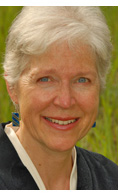
Andrew
Palmer, Sensei is resident teacher for
Wet Mountain Sangha. He began Zen practice
in 1999, was named a meditation instructor
in 2007, and was authorized to teach
by Joan Sutherland in February 2011.
In addition to working with WMS, he
teaches with Springs Mountain Sangha
in Colorado Springs, and in October
2013 began serving as the Buddhist Program
Leader at the United States Air Force
Academy Cadet Chapel. Andrew’s love
of koans and affinity for the ancestors
combines with an everyday, ordinary-mind-is-the-way
approach to practice, where awakening
is always readily at hand. He lives
in Colorado Springs with his wife and
son. Andrew’s web site can be located
at http://www.bowandroar.com |
 |
Sarah
Bender Sensei, is resident Open Source
teacher for Springs Mountain Sangha
in Colorado Springs, CO. She first practiced
Zen in 1979 in Hawai’i and was one of
the founding members of Springs Mountain
Sangha. She began studying with Joan
Sutherland in 1999, became a meditation
instructor in 2001, and was named a
sensei in 2006. She is also a learning
disability specialist in private practice.
Sarah works with some Wet Mountain Sangha
students and leads periodic joint sangha
retreats. |
|
> Back to Top |
| The Wet Mountain Sangha Steering Committee (SC) |
|
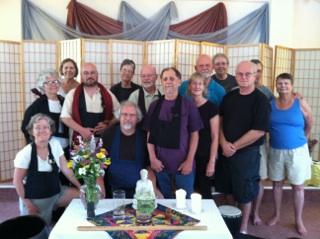
Wet
Mountain Sangha is a Colorado Non-profit Corporation.
The sangha steering committee (SC) includes the
officers of the sangha, practice leaders and interested
sangha members. Doug Mesner chairs the Steering
Committee. The SC is made up of "streams"
that manage the activities of the sangha: Program
(Merrilee Barnett, David Cockrell); Zendo; Dorcy
Center Programs (Jude LaFollette); Finance (Merrilee
Barnett, David Cockrell); and Communications.
The SC also coordinates with our teachers concerning
activities and direction for the sangha. Anyone
associated with the sangha is welcome to attend
SC meetings, which are posted in the Schedule
portion of the website.
The sangha is entirely dependent
on contributions (dana) from members and friends
for the financial health of the community. All
contributions are devoted entirely to the sangha's
operating expenses, which include primarily rent,
supplies, and periodic capital investments in
durable equipment to support our shared meditation
and dharma study practice. In 2015, the
sangha is expanding its commitment to the Center
for Inner Peace, to closer work with our holding
teachers, and to our retreats scholarship fund.
All contributions of any amount are greatly valued
and critical to the survival of the sangha. They
may be sent to the sangha treasurer, Merrilee
Barnett .
> Back to Top |
|